

Specialty pharmacies are playing a growing role under 340B, but with that growth comes complexity. Jamie Kim explains how 340B impacts specialty drug distribution, what 340B-eligible health centers need to know before partnering, and where the biggest compliance and financial risks lie. Whether you’re managing a contract pharmacy or overseeing 340B strategy in your organization, this episode offers a must-read roadmap.
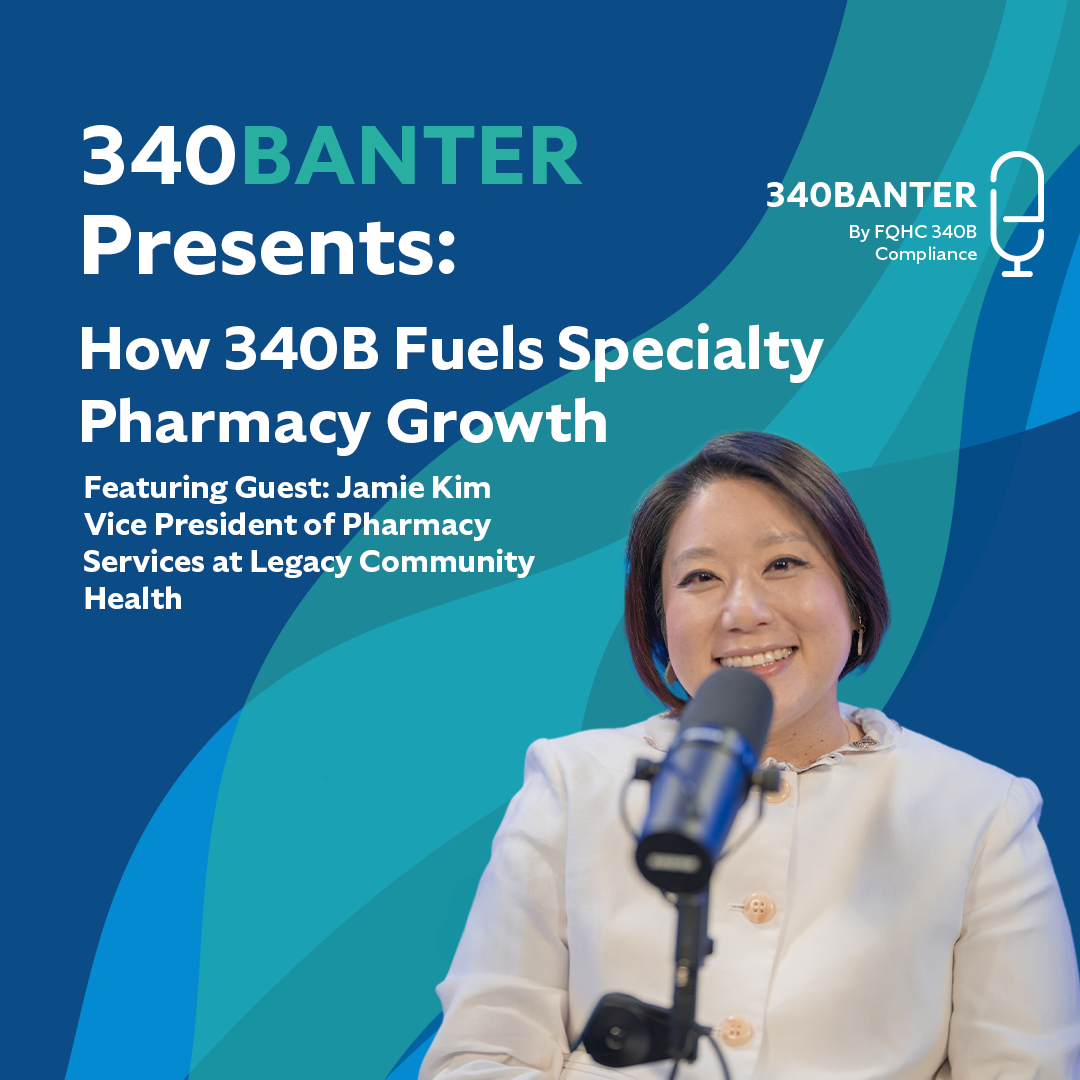

Jamie Kim, PharmD, MPHJamie Kim is the Vice President of Pharmacy Services at Legacy Community Health, where she leads strategic initiatives to expand access to care, improve health outcomes, and enhance the patient experience. Since joining Legacy in 2018, Jamie has driven transformative changes across pharmacy and clinical support services, including building multiple pharmacies and a central fill pharmacy from the ground up. She also developed Clinical and Specialty Pharmacy programs, implemented collaborative practice agreements for various disease states, and expanded the 340B program to serve underserved communities.Her leadership has modernized patient assistance and insurance programs to meet Ryan White standards, advanced cancer prevention screening and referral processes, and integrated innovative technologies to optimize pharmacy operations. Prior to Legacy, Jamie spent over a decade in pharmacy leadership at Texas Children’s Hospital, where she played a pivotal role in designing new pharmacy facilities and establishing advanced clinical services.Jamie holds a Doctor of Pharmacy from Rutgers University, completed residencies in Pediatrics and Pharmacy Administration, and earned a Master of Public Health in Healthcare Management from the University of Texas School of Public Health. Outside of work, she enjoys time with her three children and actively mentors youth alongside her husband, a youth pastor.
00:00:00.017 --> 00:00:04.857
Welcome to this episode of 340 Banter. Today, Chelsea and I are joined by Jamie
00:00:04.857 --> 00:00:08.697
Kim, Vice President of Pharmacy Services at Legacy Community Health.
00:00:08.877 --> 00:00:12.977
We'll be discussing her implementation of a specialty pharmacy program at her
00:00:12.977 --> 00:00:17.157
health center and discussing how much it's impacted the patients in Texas.
00:00:37.542 --> 00:00:44.082
So, Jamie, I know you've really developed and then grew a specialty program at your health center.
00:00:44.282 --> 00:00:47.842
And that's, I think, new for a lot of health centers to get into that specialty
00:00:47.842 --> 00:00:52.482
space. So I'd really love to discuss that and discuss your experience with it
00:00:52.482 --> 00:00:55.582
and what you've seen from the program after you got it up and running.
00:00:56.342 --> 00:01:00.662
Yeah, so I think initially we were just thinking of getting specialty accreditation
00:01:00.662 --> 00:01:02.262
through URAC because...
00:01:02.262 --> 00:01:05.922
Just, just getting accreditation because that's such an easy feat.
00:01:05.922 --> 00:01:12.722
Because we had lots of HIV population, and we thought that eventually HIV medication
00:01:12.722 --> 00:01:15.042
will be exclusively specialty.
00:01:15.322 --> 00:01:18.282
So we thought we needed that accreditation. That's how we started.
00:01:18.502 --> 00:01:23.302
And then when we started, we started to see that there are much more opportunities
00:01:23.302 --> 00:01:25.822
out there to add more drugs.
00:01:26.102 --> 00:01:31.042
And initially, because the HIV and PrEP injectables came out,
00:01:31.162 --> 00:01:36.682
and so we had to somehow launch this because our patients really wanted it and they really needed it.
00:01:36.782 --> 00:01:43.082
So we needed to find out ways to administer that drug in clinic and to get that
00:01:43.082 --> 00:01:45.862
contracts ready and how to build that business.
00:01:46.122 --> 00:01:51.342
And so that was kind of the start of it. And then I started to see that even
00:01:51.342 --> 00:01:56.422
though health centers, we treat majority primary care, there are a lot of disease
00:01:56.422 --> 00:01:58.262
states within the primary care,
00:01:58.502 --> 00:02:01.422
that you really need to provide support.
00:02:01.782 --> 00:02:06.242
Things like osteoporosis, right? Like, you don't really need to go to endocrinologists.
00:02:06.362 --> 00:02:11.042
Actually, if you empower our providers, they can prescribe these medications.
00:02:11.042 --> 00:02:14.742
And when they're actually in-house, their care is much better.
00:02:14.742 --> 00:02:20.762
Because once you send them to the specialty, that's when you actually lose them in access, right?
00:02:20.842 --> 00:02:23.402
I think we noticed that a lot with the hep C.
00:02:23.762 --> 00:02:26.662
We did the same thing within our clinic as...
00:02:27.325 --> 00:02:31.345
Focused on provider training so that they felt more comfortable with it.
00:02:31.525 --> 00:02:35.145
Yeah, and hepatitis C was big, too, because we realized that there were so many
00:02:35.145 --> 00:02:37.185
undiagnosed hepatitis C patients.
00:02:37.385 --> 00:02:41.105
And so how do we make sure that we're screening them? So we started putting
00:02:41.105 --> 00:02:46.085
in place for collaborative practice agreement for our pharmacists to see these patients.
00:02:46.705 --> 00:02:51.005
Yeah, and also... And you have so much overlap with the HIV positive population,
00:02:51.025 --> 00:02:55.665
too, with probably undiagnosed hepatitis C. Very high risk population.
00:02:56.025 --> 00:03:01.485
So and then really teaching our providers and putting in EMR clinical decision
00:03:01.485 --> 00:03:03.705
support so that they can actually screen better.
00:03:04.005 --> 00:03:08.445
So our screening rate was less than 50 percent. And within months of implementation,
00:03:08.745 --> 00:03:12.905
it went above 80 percent of all patients. That's impressive.
00:03:13.125 --> 00:03:17.285
Right. And so that was really exciting. And our providers were realizing that,
00:03:17.405 --> 00:03:20.485
wow, like we have a lot of patients that we haven't diagnosed.
00:03:20.485 --> 00:03:22.765
And then when you send them to the pharmacists.
00:03:22.925 --> 00:03:27.165
The clinical pharmacy specialists are doing a great job handling these patients,
00:03:27.165 --> 00:03:31.705
and the specialty team supports that, and our operation team supports that.
00:03:31.745 --> 00:03:37.525
So it was like a really big multidisciplinary effort, but we were coming together as a big team.
00:03:38.585 --> 00:03:44.745
Synergy. I am not going to use that term, but all those teams working together.
00:03:44.885 --> 00:03:49.185
And I think what I've noticed is at my health center, when we were trying to
00:03:49.185 --> 00:03:54.665
really get into the hep C space, and start screening those patients is the providers were,
00:03:54.865 --> 00:03:58.045
the medical providers were a little concerned because they didn't feel like
00:03:58.045 --> 00:04:00.005
they had the knowledge to do it.
00:04:00.125 --> 00:04:05.005
And having support of clinical pharmacy is a way to overcome that knowledge
00:04:05.005 --> 00:04:07.845
gap with the therapies. Yeah. So I think.
00:04:08.456 --> 00:04:14.856
If we go back to the logistics or the pharmacy logistics around stepping into
00:04:14.856 --> 00:04:16.236
the specialty pharmacy world,
00:04:16.276 --> 00:04:19.616
because I think that's something that many health centers would love to be able
00:04:19.616 --> 00:04:26.116
to pursue, but it just seems insurmountable because it doesn't fit with any
00:04:26.116 --> 00:04:28.356
of the current pharmacy initiatives within the health center.
00:04:28.356 --> 00:04:30.156
So can you talk us through logistically?
00:04:30.436 --> 00:04:35.396
You said you started with URAC accreditation. How long did that take and what
00:04:35.396 --> 00:04:38.456
other resources did you have to pull in from within the organization?
00:04:38.676 --> 00:04:42.876
What did that look like? So the URAC accreditation, I think how we did it,
00:04:43.016 --> 00:04:47.236
initially we had a little bit of help from a consultant to kind of learn how
00:04:47.236 --> 00:04:49.056
to set up the procedures first.
00:04:49.296 --> 00:04:53.516
And so they gave us some templates to work off. But then it's not really,
00:04:53.516 --> 00:04:55.056
one fit for all.
00:04:55.196 --> 00:04:58.956
Right. So when we looked at our health center, it wasn't really all that,
00:04:58.956 --> 00:05:01.216
you know, just adaptable.
00:05:01.536 --> 00:05:04.376
So we had to customize a lot of those procedures.
00:05:04.736 --> 00:05:08.696
And so, I mean, it was a lot of paperwork. And I just actually went through
00:05:08.696 --> 00:05:11.956
5.0 standard application like a few weeks ago.
00:05:12.096 --> 00:05:15.956
And that was crazy, right? Just reviewing all those procedures.
00:05:15.956 --> 00:05:21.316
But I think once you understand the, I guess.
00:05:21.736 --> 00:05:26.356
The concept behind why we're doing the accreditation, I think you're able to
00:05:26.356 --> 00:05:31.736
ensure that you're having all the procedures centered around the patient care and the access.
00:05:32.056 --> 00:05:35.576
And so I think we already had the processes already.
00:05:35.776 --> 00:05:39.016
It was just a matter of paper. Yeah, it's just writing out and spelling out
00:05:39.016 --> 00:05:42.376
and then make sure that we are held accountable for each of those things.
00:05:42.376 --> 00:05:47.616
Like, for example, how do you send those medication and delivery? How do you package them?
00:05:47.956 --> 00:05:50.856
Like, refrigerated items versus non-refrigerated.
00:05:51.216 --> 00:05:55.916
Those things, we just had to really iron out the details. But once we've done
00:05:55.916 --> 00:05:58.896
it, it was no-brainer because we already have those processes.
00:05:59.056 --> 00:06:03.516
We're already practicing it. It's just fine-tuning some of those things on paper.
00:06:03.756 --> 00:06:07.136
So who do you have to have on your team for that? Pharmacy leadership? Medical leadership?
00:06:08.060 --> 00:06:11.320
I assume, financial leadership, compliance leadership.
00:06:11.700 --> 00:06:15.300
Yeah, compliance had to really support us to make sure that everything that
00:06:15.300 --> 00:06:19.700
we were doing was correct. And then financial leadership to support us and to
00:06:19.700 --> 00:06:21.920
pay for all these accreditation.
00:06:22.160 --> 00:06:24.060
And they asked us, like, why do you need this?
00:06:24.360 --> 00:06:29.680
And so we had to really explain that some of these payers would really look
00:06:29.680 --> 00:06:32.160
at us differently once we have the Eureka accreditation.
00:06:32.160 --> 00:06:35.880
And once we start to really expand these types of medications,
00:06:36.140 --> 00:06:40.240
we would need to have these types of procedures in place to make sure that we
00:06:40.240 --> 00:06:41.500
are doing everything kosher.
00:06:41.700 --> 00:06:45.300
And so not just the payers, but I mean, getting access to some of those drugs
00:06:45.300 --> 00:06:48.160
from the manufacturers, you need that your accreditation as well.
00:06:48.400 --> 00:06:52.680
Like low distributed medications and things like that. So I think they I mean,
00:06:52.700 --> 00:06:56.960
I'm really grateful because I think our leadership really trusted us and really
00:06:56.960 --> 00:06:58.680
supported us to start this process.
00:06:58.680 --> 00:07:04.420
And once we got it done, then we got to see, wow, like we have so many opportunities
00:07:04.420 --> 00:07:08.540
that we didn't know that we had and really getting different access to medications.
00:07:08.800 --> 00:07:12.720
And I think one of the other ways that we tested a lot of the processes were
00:07:12.720 --> 00:07:14.100
actually our employee scripts.
00:07:14.360 --> 00:07:18.080
So we're like our own employer health benefits.
00:07:18.460 --> 00:07:22.280
Self-insured. Self-insured, yeah. So we had our employees
00:07:22.280 --> 00:07:24.640
seeing our providers already. They're our patients.
00:07:24.880 --> 00:07:29.040
So really testing their prescriptions. Well, and that's a great way to decrease
00:07:29.040 --> 00:07:30.880
health care costs for the employer.
00:07:31.080 --> 00:07:35.820
Yes. And you're keeping everything in-house where you can minimize the expense.
00:07:36.220 --> 00:07:41.600
And so we initially had less than 30% capture rate on all of our employee scripts.
00:07:41.740 --> 00:07:46.320
But then we came up with an initiative that we will waive their co-pays if they use our.
00:07:47.184 --> 00:07:51.964
Pharmacy. And so they started all using our pharmacy. Now our capture rate is
00:07:51.964 --> 00:07:55.024
over 85%. Wow, that's great. That's fantastic.
00:07:55.424 --> 00:07:58.824
Yes. And it really helps the employees actually feel it because when they come
00:07:58.824 --> 00:08:01.624
to our pharmacy, we provide this full service, right?
00:08:02.284 --> 00:08:07.304
Clinical pharmacy. Yeah. They get to see our pharmacist and they know that it's
00:08:07.304 --> 00:08:08.784
going to be delivered to their house.
00:08:08.944 --> 00:08:13.524
And so everything is taken care of. So I think they're now really enjoying the service.
00:08:13.764 --> 00:08:17.024
And that's how we were able to test out some of the complicated drugs.
00:08:17.164 --> 00:08:21.444
And then we would actually expand that access to our actual patients.
00:08:21.664 --> 00:08:25.624
Your non-employee patients. Yes, non-employee patients. So what was that timeline
00:08:25.624 --> 00:08:29.484
like? So from the day that you guys were like, okay, we're going to start this, let's start
00:08:29.909 --> 00:08:34.589
the process of URAC accreditation? Was it a couple months? Was it a couple years?
00:08:34.869 --> 00:08:38.909
What did that look like? No, I think URAC accreditation process only took us a couple of months.
00:08:39.129 --> 00:08:43.329
That's fast. From what I've heard. From what I've heard, most people I've talked
00:08:43.329 --> 00:08:45.369
to have said like six months or a year.
00:08:45.529 --> 00:08:49.209
Yeah, six months to a year. Yeah, I think it was about probably six-month time
00:08:49.209 --> 00:08:54.449
period because we were really trying to get this started because our HIV medication
00:08:54.449 --> 00:08:58.549
percentage was so huge and we didn't want to jeopardize.
00:08:59.049 --> 00:09:01.909
Lose access. Yeah, at that time. So we were really pushing for it.
00:09:02.029 --> 00:09:05.349
We all worked really hard, like sleepless nights.
00:09:05.569 --> 00:09:10.629
And so we did that. But I think really getting all of the specialty drugs to
00:09:10.629 --> 00:09:14.849
where we are today, I think that took us about a good five years to really build
00:09:14.849 --> 00:09:17.829
up slowly, right? So it's not something that happens overnight.
00:09:18.089 --> 00:09:19.349
I think that's an important point
00:09:19.349 --> 00:09:23.769
for a lot of health centers that are looking at this, that are in the.
00:09:24.889 --> 00:09:28.769
Challenging financial times that we're in now looking at specialty pharmacy
00:09:28.769 --> 00:09:32.069
as an opportunity to better serve their patient population, but also better
00:09:32.069 --> 00:09:33.929
financially support their organization,
00:09:34.549 --> 00:09:37.549
knowing that this is a long-term endeavor.
00:09:38.129 --> 00:09:42.489
And it falls under the guise of you have to spend money to make money.
00:09:42.649 --> 00:09:45.969
And it takes some time to build up to that is important to know.
00:09:46.249 --> 00:09:50.009
I think it's important to really target each disease state separately.
00:09:50.269 --> 00:09:52.869
But at first, actually, we were kind of naive, right?
00:09:52.989 --> 00:09:56.829
So when we did the whole HIV and PrEP and jumped into these injectables,
00:09:57.009 --> 00:10:00.829
we thought, oh, we just start and we just administer and we'll get paid.
00:10:00.849 --> 00:10:04.769
But that was not the case. We actually lost a lot of money at the beginning
00:10:04.769 --> 00:10:09.609
when we started that injectable because you actually have to bill both pharmacy
00:10:09.609 --> 00:10:10.889
side and medical billing.
00:10:11.089 --> 00:10:16.469
And in the health center space, the medical billing side on these high-cost
00:10:16.469 --> 00:10:20.709
drugs are not something that we're used to doing, right? And so we're typically
00:10:20.709 --> 00:10:24.989
used to the lower cost drugs that fall under that prospective payment system.
00:10:25.768 --> 00:10:29.988
Everything's all bundled, bundled up. And it doesn't matter, right?
00:10:30.088 --> 00:10:34.088
And so we get paid a little bit more probably. So we were able to compensate that before.
00:10:34.188 --> 00:10:38.648
But now we're talking about thousands of dollars of drugs in each administration.
00:10:38.828 --> 00:10:41.188
And we were not used to that.
00:10:41.428 --> 00:10:45.128
And so we went from Athena practice to Epic.
00:10:45.428 --> 00:10:50.068
And so that transition was very difficult too. And so you worked with like two
00:10:50.068 --> 00:10:53.008
different systems. At first, we worked with Athena.
00:10:53.248 --> 00:10:56.688
We didn't have everything on there to actually build correctly.
00:10:56.888 --> 00:11:01.408
And then we moved to Epic, but we still needed to make sure that we were collecting all those money.
00:11:01.568 --> 00:11:09.408
And so it was all like probably months and months of all of us working together, RCM, pharmacy.
00:11:09.888 --> 00:11:14.248
Medical leadership, we were all working together to ensure that we have everything
00:11:14.248 --> 00:11:18.748
built correctly clinically to build, and then make sure that your prior authorization
00:11:18.748 --> 00:11:20.808
documents were attached correctly, right?
00:11:21.048 --> 00:11:25.568
Your referrals and so prior authorization, actual author's number
00:11:25.568 --> 00:11:30.968
had to be attached to that order correctly all the way throughout the whole process.
00:11:31.268 --> 00:11:37.128
And we are doing it in a timely manner, but then also dropping the charges correctly, collecting them.
00:11:37.248 --> 00:11:42.768
So that was a lot of work that we had to do to refine that workflow and to ensure
00:11:42.768 --> 00:11:44.248
that we're collecting everything.
00:11:44.408 --> 00:11:48.488
So that took us months to figure out. And then once we did that,
00:11:48.728 --> 00:11:54.208
when you figure out one drug correctly, then now adding other drugs becomes easier.
00:11:54.208 --> 00:12:00.628
And so we actually put it in timeline for the last year to really go and add more disease states.
00:12:00.788 --> 00:12:04.188
That's when we started putting in HIV-associated metabolic disease.
00:12:04.728 --> 00:12:10.048
Osteoporosis, even hyperlipidemia, those drugs.
00:12:10.048 --> 00:12:13.848
And we started to expand our collaborative practice agreement and different
00:12:13.848 --> 00:12:17.008
disease states and also our guidelines.
00:12:17.368 --> 00:12:23.528
I think that that's definitely a great point is not don't don't bite off too much at the beginning.
00:12:23.708 --> 00:12:29.168
Make sure that you can support what you're you're doing. And I think a lot of health centers.
00:12:29.900 --> 00:12:35.480
Where they're struggling right now thinking about specialty is they're not in
00:12:35.480 --> 00:12:39.180
the place where you were with the large HIV population where they're struggling.
00:12:39.398 --> 00:12:44.498
They're worried they may not have the drugs to support a specialty pharmacy.
00:12:44.738 --> 00:12:49.418
So is there any advice you can give those health centers that are more focused
00:12:49.418 --> 00:12:54.798
on primary care, what you've seen as far as the non-HIV treatments?
00:12:55.018 --> 00:13:01.118
So even if you don't have a lot of HIV population, I think there's definitely a room for PrEP, right?
00:13:01.258 --> 00:13:04.638
Prevention of HIV is definitely, that's for everybody, right?
00:13:04.638 --> 00:13:08.738
And I'm really trying to go out there to work with schools and different,
00:13:08.738 --> 00:13:10.618
organizations.
00:13:11.018 --> 00:13:14.518
Community foundations and things. Yeah, to test them. And then you have a lot
00:13:14.518 --> 00:13:18.938
of opportunities to add that. And then hepatitis C. These long-term injectables are amazing, too.
00:13:19.198 --> 00:13:22.998
Yes. And now we have every six-month injection came out.
00:13:23.158 --> 00:13:29.518
So there are a lot of options for these young people to be more convenient prevention treatments, right?
00:13:29.638 --> 00:13:32.438
And so there are, I think, lots of opportunities there.
00:13:32.678 --> 00:13:36.978
Definitely hepatitis C. And even osteoporosis as the patients are
00:13:36.978 --> 00:13:41.018
getting older, the Medicare population, there are a lot of chronic disease states
00:13:41.018 --> 00:13:42.898
that we can definitely expand.
00:13:43.178 --> 00:13:47.498
And with the help of pharmacists, I think, and I cannot emphasize enough of
00:13:47.498 --> 00:13:50.838
the value of our clinical pharmacy specialists who are able to,
00:13:50.838 --> 00:13:52.678
like, develop these guidelines.
00:13:53.198 --> 00:13:58.298
Provide education to our providers to empower them, and then support them behind the scenes, right?
00:13:58.418 --> 00:14:02.938
And to see them, see the patients directly, that will really go a long way.
00:14:02.938 --> 00:14:09.258
I think, I mean, having the pharmacist there is so wonderful just for the health center in general.
00:14:09.538 --> 00:14:14.238
And I think that you spoke to your employees, really seeing the value
00:14:14.238 --> 00:14:19.278
and the benefit of the pharmacy being able to get the whole experience and just
00:14:19.278 --> 00:14:22.758
having the pharmacists embedded within the clinic or connected within the clinic
00:14:22.758 --> 00:14:24.698
empowers your prescribers,
00:14:24.898 --> 00:14:30.478
your providers to be more on top of the latest data behind the
00:14:30.478 --> 00:14:31.258
different medications.
00:14:31.258 --> 00:14:36.018
And then if there are any challenges with prescriptions, they're typically dealt
00:14:36.018 --> 00:14:40.538
with much more quickly because the pharmacist and provider already have a relationship with.
00:14:40.865 --> 00:14:45.485
Where they can go and have a dose change. You can have collaborative practice agreements for things.
00:14:45.665 --> 00:14:50.945
So I think in general, the experience of the patient is much different,
00:14:50.945 --> 00:14:55.365
as well as for the prescribers and the pharmacists, because they're able to
00:14:55.365 --> 00:14:58.665
navigate challenging situations with much more ease.
00:14:59.085 --> 00:15:02.265
Yeah, and maximizing the utilization of the EMR, right?
00:15:02.325 --> 00:15:06.105
So now we have a lot of good clinical decision supports, and so you can create
00:15:06.105 --> 00:15:10.705
smart tags or order sets and things like that, And that really helps our providers.
00:15:11.365 --> 00:15:15.085
You mentioned earlier prior authorizations, and I think that that's somewhere
00:15:15.085 --> 00:15:16.585
where a lot of health centers struggle.
00:15:16.965 --> 00:15:20.965
And I think ultimately, if you're getting into the specialty space,
00:15:21.125 --> 00:15:24.685
this is probably the thing you need to sure up before you get in.
00:15:24.825 --> 00:15:29.005
So maybe tell us a little bit about how your prior authorizations are handled
00:15:29.005 --> 00:15:32.445
in your health center and how you've wrapped that in.
00:15:32.565 --> 00:15:36.485
So we actually created a unique team called Medication Adherence and Access
00:15:36.485 --> 00:15:41.305
Team. and they are actually a little bit more experienced technicians and they're
00:15:41.305 --> 00:15:42.605
delegates of our providers.
00:15:42.885 --> 00:15:46.265
So initially, that team really started to renew prescriptions.
00:15:46.465 --> 00:15:49.725
Once the refills run out, then sometimes you have this gap, right?
00:15:49.805 --> 00:15:53.525
Because the patient has not seen the provider yet or they didn't get the labs.
00:15:53.725 --> 00:15:55.705
And so they're going to run out of refills.
00:15:55.925 --> 00:16:00.025
And until the next visit, they don't have the medications on hand.
00:16:00.065 --> 00:16:05.145
So what we've done is we created a protocol where under the doctor's provision,
00:16:05.445 --> 00:16:12.405
these technicians can actually add in another refill for the patient until they see the provider.
00:16:12.525 --> 00:16:16.285
And they can actually make an appointment for the provider. So we created this.
00:16:16.465 --> 00:16:20.185
Not unlike what MAs do for providers in most instances.
00:16:20.365 --> 00:16:25.345
Yes, but we created a centralized team that could support our whole organization to do that.
00:16:25.445 --> 00:16:29.205
And that really increased the efficiency of our providers and MAs.
00:16:29.865 --> 00:16:33.165
Being pharmacy technicians, I love because they speak the language.
00:16:33.345 --> 00:16:36.785
I don't know how many times I sent a prior authorization to an MA or
00:16:36.941 --> 00:16:39.441
And they were trying to help, but they'd call and they'd say,
00:16:39.581 --> 00:16:41.761
well, the prior authorization is not required.
00:16:42.061 --> 00:16:46.061
Well, it's not on the drug, but it maybe is on the frequency or the direction.
00:16:46.481 --> 00:16:49.581
So having the technician there, they speak that language. Yeah,
00:16:49.581 --> 00:16:53.161
and they are really equipped to do this job of bridging the gap.
00:16:53.561 --> 00:16:57.661
It also creates a career ladder for an area that often lacks.
00:16:57.661 --> 00:17:02.141
And so that really gave them the empowerment and also, I think,
00:17:02.281 --> 00:17:07.361
the joy of moving up to another realm of pharmacy world.
00:17:07.561 --> 00:17:11.601
And as we were doing that, we started to have them specialize in prior authorization.
00:17:11.861 --> 00:17:16.921
So it's a centralized model. So once our pharmacists need a prior authorization.
00:17:17.361 --> 00:17:21.561
Then they send that message over to this team and then they take over from that.
00:17:21.561 --> 00:17:25.201
And a lot of these drugs, because we develop clinical guidelines,
00:17:25.461 --> 00:17:30.261
we actually create a smart text for our providers to add when they're seeing
00:17:30.261 --> 00:17:35.481
the patient. So all of the clinical criteria are already built in your EMR record. That's great.
00:17:35.721 --> 00:17:39.141
So then the technician just needs to pull that and then just send it over.
00:17:39.261 --> 00:17:41.501
So the process is seamless, right?
00:17:41.621 --> 00:17:46.221
They don't have to really dig in, look for all these clinical criteria to send
00:17:46.221 --> 00:17:47.441
in for prior authorization.
00:17:47.841 --> 00:17:52.101
Everything is one document. It's in one place. Yes. And so that made so much easier.
00:17:52.261 --> 00:17:57.021
So every time we find a complex disease state, that's when we pull back and
00:17:57.021 --> 00:17:59.001
actually develop these types of smart text.
00:17:59.221 --> 00:18:01.621
That's great. And I think that that.
00:18:02.831 --> 00:18:07.831
Probably from your medical and nursing teams are probably thrilled to give that
00:18:07.831 --> 00:18:09.871
up because no one likes prior authorizations.
00:18:10.171 --> 00:18:13.851
Everybody hates that part of the job, right? Yes, but what I've seen,
00:18:13.971 --> 00:18:17.031
and I've seen this in other health centers, that they're starting to have technicians
00:18:17.031 --> 00:18:18.431
handle the prior authorizations.
00:18:18.651 --> 00:18:23.231
And technicians actually, they're good at it, and they actually enjoy the work.
00:18:23.411 --> 00:18:28.211
And they understand the impact of it. And I think really what we've done is
00:18:28.211 --> 00:18:33.851
trying to really have all of our staff really practice at the top of their license.
00:18:33.851 --> 00:18:35.771
And how do we do that to empower them?
00:18:35.931 --> 00:18:39.831
Because they are more than capable of doing, you know, just dispensing, right?
00:18:39.991 --> 00:18:44.891
We've even given our pharmacists on the floor a PrEP program.
00:18:44.911 --> 00:18:48.571
So they're actually handling the whole PrEP program on their own.
00:18:48.731 --> 00:18:52.531
They're swabbing the patients, ordering labs, they can prescribe.
00:18:53.151 --> 00:18:57.451
And even osteoporosis and all of these injections, they're able to inject themselves.
00:18:57.611 --> 00:19:03.511
And so they're like, yeah, they're taking over in-between visits from providers.
00:19:03.571 --> 00:19:07.631
So if the patients are seeing them only once or twice a year,
00:19:08.031 --> 00:19:12.111
the pharmacists and technicians are bridging all the gaps in between.
00:19:12.111 --> 00:19:16.951
And so it's very exciting for them to be part participating in this type of program.
00:19:17.271 --> 00:19:20.211
Jamie, it's been super wonderful to speak with you today.
00:19:20.331 --> 00:19:24.331
And I really like that we have some kind of tips and tricks for success for
00:19:24.331 --> 00:19:29.391
health centers that might be looking at the specialty pharmacy realm and things
00:19:29.391 --> 00:19:34.071
that they can do in-house to maybe work themselves up to that point.
00:19:34.191 --> 00:19:36.891
Thank you so much for meeting with us today and sharing all that.
00:19:37.331 --> 00:19:38.671
Yeah, thank you. You're very welcome.
"If you empower providers to prescribe these medications in-house, patient care improves significantly because you don't lose patients in access."

Meet Logan Yoho, PharmD, BCACP, 340B ACE, and co-host of the 340Banter Podcast. With nearly a decade of experience in the 340B industry, Logan is dedicated to helping health centers optimize and maintain successful, compliant 340B Programs. As Director of Advocacy and Education at FQHC 340B Compliance, he focuses on implementing entity-owned pharmacies and guiding advocacy efforts for 340B. Logan’s extensive background includes leading the pharmacy and 340B programs at Hopewell Health Centers, serving as Apexus 340B University Faculty, and chairing the Ohio 340B FQHC Consortium. Logan’s leadership and expertise have earned him multiple awards, and he brings a wealth of knowledge to every episode of 340Banter.

Meet Chelsea Violette, PharmD, BCACP, 340B ACE, and your co-host for the 340Banter Podcast. With over a decade of experience in pharmacy and 340B Program management, Chelsea brings a wealth of knowledge to the table. As Chief Operating Officer at FQHC 340B Compliance, she works tirelessly to support health centers across the country, ensuring they have the tools and strategies they need to succeed. Chelsea’s hands-on experience as a 340B Consultant and Pharmacy Manager, combined with her expertise as a subject matter expert for the Apexus 340B Prime Vendor Program, makes her a trusted voice in the world of 340B compliance. Tune in for her practical insights, guidance, and lively discussions on all things 340B.
00:00:00.017 --> 00:00:04.857
Welcome to this episode of 340 Banter. Today, Chelsea and I are joined by Jamie
00:00:04.857 --> 00:00:08.697
Kim, Vice President of Pharmacy Services at Legacy Community Health.
00:00:08.877 --> 00:00:12.977
We'll be discussing her implementation of a specialty pharmacy program at her
00:00:12.977 --> 00:00:17.157
health center and discussing how much it's impacted the patients in Texas.
00:00:37.542 --> 00:00:44.082
So, Jamie, I know you've really developed and then grew a specialty program at your health center.
00:00:44.282 --> 00:00:47.842
And that's, I think, new for a lot of health centers to get into that specialty
00:00:47.842 --> 00:00:52.482
space. So I'd really love to discuss that and discuss your experience with it
00:00:52.482 --> 00:00:55.582
and what you've seen from the program after you got it up and running.
00:00:56.342 --> 00:01:00.662
Yeah, so I think initially we were just thinking of getting specialty accreditation
00:01:00.662 --> 00:01:02.262
through URAC because...
00:01:02.262 --> 00:01:05.922
Just, just getting accreditation because that's such an easy feat.
00:01:05.922 --> 00:01:12.722
Because we had lots of HIV population, and we thought that eventually HIV medication
00:01:12.722 --> 00:01:15.042
will be exclusively specialty.
00:01:15.322 --> 00:01:18.282
So we thought we needed that accreditation. That's how we started.
00:01:18.502 --> 00:01:23.302
And then when we started, we started to see that there are much more opportunities
00:01:23.302 --> 00:01:25.822
out there to add more drugs.
00:01:26.102 --> 00:01:31.042
And initially, because the HIV and PrEP injectables came out,
00:01:31.162 --> 00:01:36.682
and so we had to somehow launch this because our patients really wanted it and they really needed it.
00:01:36.782 --> 00:01:43.082
So we needed to find out ways to administer that drug in clinic and to get that
00:01:43.082 --> 00:01:45.862
contracts ready and how to build that business.
00:01:46.122 --> 00:01:51.342
And so that was kind of the start of it. And then I started to see that even
00:01:51.342 --> 00:01:56.422
though health centers, we treat majority primary care, there are a lot of disease
00:01:56.422 --> 00:01:58.262
states within the primary care,
00:01:58.502 --> 00:02:01.422
that you really need to provide support.
00:02:01.782 --> 00:02:06.242
Things like osteoporosis, right? Like, you don't really need to go to endocrinologists.
00:02:06.362 --> 00:02:11.042
Actually, if you empower our providers, they can prescribe these medications.
00:02:11.042 --> 00:02:14.742
And when they're actually in-house, their care is much better.
00:02:14.742 --> 00:02:20.762
Because once you send them to the specialty, that's when you actually lose them in access, right?
00:02:20.842 --> 00:02:23.402
I think we noticed that a lot with the hep C.
00:02:23.762 --> 00:02:26.662
We did the same thing within our clinic as...
00:02:27.325 --> 00:02:31.345
Focused on provider training so that they felt more comfortable with it.
00:02:31.525 --> 00:02:35.145
Yeah, and hepatitis C was big, too, because we realized that there were so many
00:02:35.145 --> 00:02:37.185
undiagnosed hepatitis C patients.
00:02:37.385 --> 00:02:41.105
And so how do we make sure that we're screening them? So we started putting
00:02:41.105 --> 00:02:46.085
in place for collaborative practice agreement for our pharmacists to see these patients.
00:02:46.705 --> 00:02:51.005
Yeah, and also... And you have so much overlap with the HIV positive population,
00:02:51.025 --> 00:02:55.665
too, with probably undiagnosed hepatitis C. Very high risk population.
00:02:56.025 --> 00:03:01.485
So and then really teaching our providers and putting in EMR clinical decision
00:03:01.485 --> 00:03:03.705
support so that they can actually screen better.
00:03:04.005 --> 00:03:08.445
So our screening rate was less than 50 percent. And within months of implementation,
00:03:08.745 --> 00:03:12.905
it went above 80 percent of all patients. That's impressive.
00:03:13.125 --> 00:03:17.285
Right. And so that was really exciting. And our providers were realizing that,
00:03:17.405 --> 00:03:20.485
wow, like we have a lot of patients that we haven't diagnosed.
00:03:20.485 --> 00:03:22.765
And then when you send them to the pharmacists.
00:03:22.925 --> 00:03:27.165
The clinical pharmacy specialists are doing a great job handling these patients,
00:03:27.165 --> 00:03:31.705
and the specialty team supports that, and our operation team supports that.
00:03:31.745 --> 00:03:37.525
So it was like a really big multidisciplinary effort, but we were coming together as a big team.
00:03:38.585 --> 00:03:44.745
Synergy. I am not going to use that term, but all those teams working together.
00:03:44.885 --> 00:03:49.185
And I think what I've noticed is at my health center, when we were trying to
00:03:49.185 --> 00:03:54.665
really get into the hep C space, and start screening those patients is the providers were,
00:03:54.865 --> 00:03:58.045
the medical providers were a little concerned because they didn't feel like
00:03:58.045 --> 00:04:00.005
they had the knowledge to do it.
00:04:00.125 --> 00:04:05.005
And having support of clinical pharmacy is a way to overcome that knowledge
00:04:05.005 --> 00:04:07.845
gap with the therapies. Yeah. So I think.
00:04:08.456 --> 00:04:14.856
If we go back to the logistics or the pharmacy logistics around stepping into
00:04:14.856 --> 00:04:16.236
the specialty pharmacy world,
00:04:16.276 --> 00:04:19.616
because I think that's something that many health centers would love to be able
00:04:19.616 --> 00:04:26.116
to pursue, but it just seems insurmountable because it doesn't fit with any
00:04:26.116 --> 00:04:28.356
of the current pharmacy initiatives within the health center.
00:04:28.356 --> 00:04:30.156
So can you talk us through logistically?
00:04:30.436 --> 00:04:35.396
You said you started with URAC accreditation. How long did that take and what
00:04:35.396 --> 00:04:38.456
other resources did you have to pull in from within the organization?
00:04:38.676 --> 00:04:42.876
What did that look like? So the URAC accreditation, I think how we did it,
00:04:43.016 --> 00:04:47.236
initially we had a little bit of help from a consultant to kind of learn how
00:04:47.236 --> 00:04:49.056
to set up the procedures first.
00:04:49.296 --> 00:04:53.516
And so they gave us some templates to work off. But then it's not really,
00:04:53.516 --> 00:04:55.056
one fit for all.
00:04:55.196 --> 00:04:58.956
Right. So when we looked at our health center, it wasn't really all that,
00:04:58.956 --> 00:05:01.216
you know, just adaptable.
00:05:01.536 --> 00:05:04.376
So we had to customize a lot of those procedures.
00:05:04.736 --> 00:05:08.696
And so, I mean, it was a lot of paperwork. And I just actually went through
00:05:08.696 --> 00:05:11.956
5.0 standard application like a few weeks ago.
00:05:12.096 --> 00:05:15.956
And that was crazy, right? Just reviewing all those procedures.
00:05:15.956 --> 00:05:21.316
But I think once you understand the, I guess.
00:05:21.736 --> 00:05:26.356
The concept behind why we're doing the accreditation, I think you're able to
00:05:26.356 --> 00:05:31.736
ensure that you're having all the procedures centered around the patient care and the access.
00:05:32.056 --> 00:05:35.576
And so I think we already had the processes already.
00:05:35.776 --> 00:05:39.016
It was just a matter of paper. Yeah, it's just writing out and spelling out
00:05:39.016 --> 00:05:42.376
and then make sure that we are held accountable for each of those things.
00:05:42.376 --> 00:05:47.616
Like, for example, how do you send those medication and delivery? How do you package them?
00:05:47.956 --> 00:05:50.856
Like, refrigerated items versus non-refrigerated.
00:05:51.216 --> 00:05:55.916
Those things, we just had to really iron out the details. But once we've done
00:05:55.916 --> 00:05:58.896
it, it was no-brainer because we already have those processes.
00:05:59.056 --> 00:06:03.516
We're already practicing it. It's just fine-tuning some of those things on paper.
00:06:03.756 --> 00:06:07.136
So who do you have to have on your team for that? Pharmacy leadership? Medical leadership?
00:06:08.060 --> 00:06:11.320
I assume, financial leadership, compliance leadership.
00:06:11.700 --> 00:06:15.300
Yeah, compliance had to really support us to make sure that everything that
00:06:15.300 --> 00:06:19.700
we were doing was correct. And then financial leadership to support us and to
00:06:19.700 --> 00:06:21.920
pay for all these accreditation.
00:06:22.160 --> 00:06:24.060
And they asked us, like, why do you need this?
00:06:24.360 --> 00:06:29.680
And so we had to really explain that some of these payers would really look
00:06:29.680 --> 00:06:32.160
at us differently once we have the Eureka accreditation.
00:06:32.160 --> 00:06:35.880
And once we start to really expand these types of medications,
00:06:36.140 --> 00:06:40.240
we would need to have these types of procedures in place to make sure that we
00:06:40.240 --> 00:06:41.500
are doing everything kosher.
00:06:41.700 --> 00:06:45.300
And so not just the payers, but I mean, getting access to some of those drugs
00:06:45.300 --> 00:06:48.160
from the manufacturers, you need that your accreditation as well.
00:06:48.400 --> 00:06:52.680
Like low distributed medications and things like that. So I think they I mean,
00:06:52.700 --> 00:06:56.960
I'm really grateful because I think our leadership really trusted us and really
00:06:56.960 --> 00:06:58.680
supported us to start this process.
00:06:58.680 --> 00:07:04.420
And once we got it done, then we got to see, wow, like we have so many opportunities
00:07:04.420 --> 00:07:08.540
that we didn't know that we had and really getting different access to medications.
00:07:08.800 --> 00:07:12.720
And I think one of the other ways that we tested a lot of the processes were
00:07:12.720 --> 00:07:14.100
actually our employee scripts.
00:07:14.360 --> 00:07:18.080
So we're like our own employer health benefits.
00:07:18.460 --> 00:07:22.280
Self-insured. Self-insured, yeah. So we had our employees
00:07:22.280 --> 00:07:24.640
seeing our providers already. They're our patients.
00:07:24.880 --> 00:07:29.040
So really testing their prescriptions. Well, and that's a great way to decrease
00:07:29.040 --> 00:07:30.880
health care costs for the employer.
00:07:31.080 --> 00:07:35.820
Yes. And you're keeping everything in-house where you can minimize the expense.
00:07:36.220 --> 00:07:41.600
And so we initially had less than 30% capture rate on all of our employee scripts.
00:07:41.740 --> 00:07:46.320
But then we came up with an initiative that we will waive their co-pays if they use our.
00:07:47.184 --> 00:07:51.964
Pharmacy. And so they started all using our pharmacy. Now our capture rate is
00:07:51.964 --> 00:07:55.024
over 85%. Wow, that's great. That's fantastic.
00:07:55.424 --> 00:07:58.824
Yes. And it really helps the employees actually feel it because when they come
00:07:58.824 --> 00:08:01.624
to our pharmacy, we provide this full service, right?
00:08:02.284 --> 00:08:07.304
Clinical pharmacy. Yeah. They get to see our pharmacist and they know that it's
00:08:07.304 --> 00:08:08.784
going to be delivered to their house.
00:08:08.944 --> 00:08:13.524
And so everything is taken care of. So I think they're now really enjoying the service.
00:08:13.764 --> 00:08:17.024
And that's how we were able to test out some of the complicated drugs.
00:08:17.164 --> 00:08:21.444
And then we would actually expand that access to our actual patients.
00:08:21.664 --> 00:08:25.624
Your non-employee patients. Yes, non-employee patients. So what was that timeline
00:08:25.624 --> 00:08:29.484
like? So from the day that you guys were like, okay, we're going to start this, let's start
00:08:29.909 --> 00:08:34.589
the process of URAC accreditation? Was it a couple months? Was it a couple years?
00:08:34.869 --> 00:08:38.909
What did that look like? No, I think URAC accreditation process only took us a couple of months.
00:08:39.129 --> 00:08:43.329
That's fast. From what I've heard. From what I've heard, most people I've talked
00:08:43.329 --> 00:08:45.369
to have said like six months or a year.
00:08:45.529 --> 00:08:49.209
Yeah, six months to a year. Yeah, I think it was about probably six-month time
00:08:49.209 --> 00:08:54.449
period because we were really trying to get this started because our HIV medication
00:08:54.449 --> 00:08:58.549
percentage was so huge and we didn't want to jeopardize.
00:08:59.049 --> 00:09:01.909
Lose access. Yeah, at that time. So we were really pushing for it.
00:09:02.029 --> 00:09:05.349
We all worked really hard, like sleepless nights.
00:09:05.569 --> 00:09:10.629
And so we did that. But I think really getting all of the specialty drugs to
00:09:10.629 --> 00:09:14.849
where we are today, I think that took us about a good five years to really build
00:09:14.849 --> 00:09:17.829
up slowly, right? So it's not something that happens overnight.
00:09:18.089 --> 00:09:19.349
I think that's an important point
00:09:19.349 --> 00:09:23.769
for a lot of health centers that are looking at this, that are in the.
00:09:24.889 --> 00:09:28.769
Challenging financial times that we're in now looking at specialty pharmacy
00:09:28.769 --> 00:09:32.069
as an opportunity to better serve their patient population, but also better
00:09:32.069 --> 00:09:33.929
financially support their organization,
00:09:34.549 --> 00:09:37.549
knowing that this is a long-term endeavor.
00:09:38.129 --> 00:09:42.489
And it falls under the guise of you have to spend money to make money.
00:09:42.649 --> 00:09:45.969
And it takes some time to build up to that is important to know.
00:09:46.249 --> 00:09:50.009
I think it's important to really target each disease state separately.
00:09:50.269 --> 00:09:52.869
But at first, actually, we were kind of naive, right?
00:09:52.989 --> 00:09:56.829
So when we did the whole HIV and PrEP and jumped into these injectables,
00:09:57.009 --> 00:10:00.829
we thought, oh, we just start and we just administer and we'll get paid.
00:10:00.849 --> 00:10:04.769
But that was not the case. We actually lost a lot of money at the beginning
00:10:04.769 --> 00:10:09.609
when we started that injectable because you actually have to bill both pharmacy
00:10:09.609 --> 00:10:10.889
side and medical billing.
00:10:11.089 --> 00:10:16.469
And in the health center space, the medical billing side on these high-cost
00:10:16.469 --> 00:10:20.709
drugs are not something that we're used to doing, right? And so we're typically
00:10:20.709 --> 00:10:24.989
used to the lower cost drugs that fall under that prospective payment system.
00:10:25.768 --> 00:10:29.988
Everything's all bundled, bundled up. And it doesn't matter, right?
00:10:30.088 --> 00:10:34.088
And so we get paid a little bit more probably. So we were able to compensate that before.
00:10:34.188 --> 00:10:38.648
But now we're talking about thousands of dollars of drugs in each administration.
00:10:38.828 --> 00:10:41.188
And we were not used to that.
00:10:41.428 --> 00:10:45.128
And so we went from Athena practice to Epic.
00:10:45.428 --> 00:10:50.068
And so that transition was very difficult too. And so you worked with like two
00:10:50.068 --> 00:10:53.008
different systems. At first, we worked with Athena.
00:10:53.248 --> 00:10:56.688
We didn't have everything on there to actually build correctly.
00:10:56.888 --> 00:11:01.408
And then we moved to Epic, but we still needed to make sure that we were collecting all those money.
00:11:01.568 --> 00:11:09.408
And so it was all like probably months and months of all of us working together, RCM, pharmacy.
00:11:09.888 --> 00:11:14.248
Medical leadership, we were all working together to ensure that we have everything
00:11:14.248 --> 00:11:18.748
built correctly clinically to build, and then make sure that your prior authorization
00:11:18.748 --> 00:11:20.808
documents were attached correctly, right?
00:11:21.048 --> 00:11:25.568
Your referrals and so prior authorization, actual author's number
00:11:25.568 --> 00:11:30.968
had to be attached to that order correctly all the way throughout the whole process.
00:11:31.268 --> 00:11:37.128
And we are doing it in a timely manner, but then also dropping the charges correctly, collecting them.
00:11:37.248 --> 00:11:42.768
So that was a lot of work that we had to do to refine that workflow and to ensure
00:11:42.768 --> 00:11:44.248
that we're collecting everything.
00:11:44.408 --> 00:11:48.488
So that took us months to figure out. And then once we did that,
00:11:48.728 --> 00:11:54.208
when you figure out one drug correctly, then now adding other drugs becomes easier.
00:11:54.208 --> 00:12:00.628
And so we actually put it in timeline for the last year to really go and add more disease states.
00:12:00.788 --> 00:12:04.188
That's when we started putting in HIV-associated metabolic disease.
00:12:04.728 --> 00:12:10.048
Osteoporosis, even hyperlipidemia, those drugs.
00:12:10.048 --> 00:12:13.848
And we started to expand our collaborative practice agreement and different
00:12:13.848 --> 00:12:17.008
disease states and also our guidelines.
00:12:17.368 --> 00:12:23.528
I think that that's definitely a great point is not don't don't bite off too much at the beginning.
00:12:23.708 --> 00:12:29.168
Make sure that you can support what you're you're doing. And I think a lot of health centers.
00:12:29.900 --> 00:12:35.480
Where they're struggling right now thinking about specialty is they're not in
00:12:35.480 --> 00:12:39.180
the place where you were with the large HIV population where they're struggling.
00:12:39.398 --> 00:12:44.498
They're worried they may not have the drugs to support a specialty pharmacy.
00:12:44.738 --> 00:12:49.418
So is there any advice you can give those health centers that are more focused
00:12:49.418 --> 00:12:54.798
on primary care, what you've seen as far as the non-HIV treatments?
00:12:55.018 --> 00:13:01.118
So even if you don't have a lot of HIV population, I think there's definitely a room for PrEP, right?
00:13:01.258 --> 00:13:04.638
Prevention of HIV is definitely, that's for everybody, right?
00:13:04.638 --> 00:13:08.738
And I'm really trying to go out there to work with schools and different,
00:13:08.738 --> 00:13:10.618
organizations.
00:13:11.018 --> 00:13:14.518
Community foundations and things. Yeah, to test them. And then you have a lot
00:13:14.518 --> 00:13:18.938
of opportunities to add that. And then hepatitis C. These long-term injectables are amazing, too.
00:13:19.198 --> 00:13:22.998
Yes. And now we have every six-month injection came out.
00:13:23.158 --> 00:13:29.518
So there are a lot of options for these young people to be more convenient prevention treatments, right?
00:13:29.638 --> 00:13:32.438
And so there are, I think, lots of opportunities there.
00:13:32.678 --> 00:13:36.978
Definitely hepatitis C. And even osteoporosis as the patients are
00:13:36.978 --> 00:13:41.018
getting older, the Medicare population, there are a lot of chronic disease states
00:13:41.018 --> 00:13:42.898
that we can definitely expand.
00:13:43.178 --> 00:13:47.498
And with the help of pharmacists, I think, and I cannot emphasize enough of
00:13:47.498 --> 00:13:50.838
the value of our clinical pharmacy specialists who are able to,
00:13:50.838 --> 00:13:52.678
like, develop these guidelines.
00:13:53.198 --> 00:13:58.298
Provide education to our providers to empower them, and then support them behind the scenes, right?
00:13:58.418 --> 00:14:02.938
And to see them, see the patients directly, that will really go a long way.
00:14:02.938 --> 00:14:09.258
I think, I mean, having the pharmacist there is so wonderful just for the health center in general.
00:14:09.538 --> 00:14:14.238
And I think that you spoke to your employees, really seeing the value
00:14:14.238 --> 00:14:19.278
and the benefit of the pharmacy being able to get the whole experience and just
00:14:19.278 --> 00:14:22.758
having the pharmacists embedded within the clinic or connected within the clinic
00:14:22.758 --> 00:14:24.698
empowers your prescribers,
00:14:24.898 --> 00:14:30.478
your providers to be more on top of the latest data behind the
00:14:30.478 --> 00:14:31.258
different medications.
00:14:31.258 --> 00:14:36.018
And then if there are any challenges with prescriptions, they're typically dealt
00:14:36.018 --> 00:14:40.538
with much more quickly because the pharmacist and provider already have a relationship with.
00:14:40.865 --> 00:14:45.485
Where they can go and have a dose change. You can have collaborative practice agreements for things.
00:14:45.665 --> 00:14:50.945
So I think in general, the experience of the patient is much different,
00:14:50.945 --> 00:14:55.365
as well as for the prescribers and the pharmacists, because they're able to
00:14:55.365 --> 00:14:58.665
navigate challenging situations with much more ease.
00:14:59.085 --> 00:15:02.265
Yeah, and maximizing the utilization of the EMR, right?
00:15:02.325 --> 00:15:06.105
So now we have a lot of good clinical decision supports, and so you can create
00:15:06.105 --> 00:15:10.705
smart tags or order sets and things like that, And that really helps our providers.
00:15:11.365 --> 00:15:15.085
You mentioned earlier prior authorizations, and I think that that's somewhere
00:15:15.085 --> 00:15:16.585
where a lot of health centers struggle.
00:15:16.965 --> 00:15:20.965
And I think ultimately, if you're getting into the specialty space,
00:15:21.125 --> 00:15:24.685
this is probably the thing you need to sure up before you get in.
00:15:24.825 --> 00:15:29.005
So maybe tell us a little bit about how your prior authorizations are handled
00:15:29.005 --> 00:15:32.445
in your health center and how you've wrapped that in.
00:15:32.565 --> 00:15:36.485
So we actually created a unique team called Medication Adherence and Access
00:15:36.485 --> 00:15:41.305
Team. and they are actually a little bit more experienced technicians and they're
00:15:41.305 --> 00:15:42.605
delegates of our providers.
00:15:42.885 --> 00:15:46.265
So initially, that team really started to renew prescriptions.
00:15:46.465 --> 00:15:49.725
Once the refills run out, then sometimes you have this gap, right?
00:15:49.805 --> 00:15:53.525
Because the patient has not seen the provider yet or they didn't get the labs.
00:15:53.725 --> 00:15:55.705
And so they're going to run out of refills.
00:15:55.925 --> 00:16:00.025
And until the next visit, they don't have the medications on hand.
00:16:00.065 --> 00:16:05.145
So what we've done is we created a protocol where under the doctor's provision,
00:16:05.445 --> 00:16:12.405
these technicians can actually add in another refill for the patient until they see the provider.
00:16:12.525 --> 00:16:16.285
And they can actually make an appointment for the provider. So we created this.
00:16:16.465 --> 00:16:20.185
Not unlike what MAs do for providers in most instances.
00:16:20.365 --> 00:16:25.345
Yes, but we created a centralized team that could support our whole organization to do that.
00:16:25.445 --> 00:16:29.205
And that really increased the efficiency of our providers and MAs.
00:16:29.865 --> 00:16:33.165
Being pharmacy technicians, I love because they speak the language.
00:16:33.345 --> 00:16:36.785
I don't know how many times I sent a prior authorization to an MA or
00:16:36.941 --> 00:16:39.441
And they were trying to help, but they'd call and they'd say,
00:16:39.581 --> 00:16:41.761
well, the prior authorization is not required.
00:16:42.061 --> 00:16:46.061
Well, it's not on the drug, but it maybe is on the frequency or the direction.
00:16:46.481 --> 00:16:49.581
So having the technician there, they speak that language. Yeah,
00:16:49.581 --> 00:16:53.161
and they are really equipped to do this job of bridging the gap.
00:16:53.561 --> 00:16:57.661
It also creates a career ladder for an area that often lacks.
00:16:57.661 --> 00:17:02.141
And so that really gave them the empowerment and also, I think,
00:17:02.281 --> 00:17:07.361
the joy of moving up to another realm of pharmacy world.
00:17:07.561 --> 00:17:11.601
And as we were doing that, we started to have them specialize in prior authorization.
00:17:11.861 --> 00:17:16.921
So it's a centralized model. So once our pharmacists need a prior authorization.
00:17:17.361 --> 00:17:21.561
Then they send that message over to this team and then they take over from that.
00:17:21.561 --> 00:17:25.201
And a lot of these drugs, because we develop clinical guidelines,
00:17:25.461 --> 00:17:30.261
we actually create a smart text for our providers to add when they're seeing
00:17:30.261 --> 00:17:35.481
the patient. So all of the clinical criteria are already built in your EMR record. That's great.
00:17:35.721 --> 00:17:39.141
So then the technician just needs to pull that and then just send it over.
00:17:39.261 --> 00:17:41.501
So the process is seamless, right?
00:17:41.621 --> 00:17:46.221
They don't have to really dig in, look for all these clinical criteria to send
00:17:46.221 --> 00:17:47.441
in for prior authorization.
00:17:47.841 --> 00:17:52.101
Everything is one document. It's in one place. Yes. And so that made so much easier.
00:17:52.261 --> 00:17:57.021
So every time we find a complex disease state, that's when we pull back and
00:17:57.021 --> 00:17:59.001
actually develop these types of smart text.
00:17:59.221 --> 00:18:01.621
That's great. And I think that that.
00:18:02.831 --> 00:18:07.831
Probably from your medical and nursing teams are probably thrilled to give that
00:18:07.831 --> 00:18:09.871
up because no one likes prior authorizations.
00:18:10.171 --> 00:18:13.851
Everybody hates that part of the job, right? Yes, but what I've seen,
00:18:13.971 --> 00:18:17.031
and I've seen this in other health centers, that they're starting to have technicians
00:18:17.031 --> 00:18:18.431
handle the prior authorizations.
00:18:18.651 --> 00:18:23.231
And technicians actually, they're good at it, and they actually enjoy the work.
00:18:23.411 --> 00:18:28.211
And they understand the impact of it. And I think really what we've done is
00:18:28.211 --> 00:18:33.851
trying to really have all of our staff really practice at the top of their license.
00:18:33.851 --> 00:18:35.771
And how do we do that to empower them?
00:18:35.931 --> 00:18:39.831
Because they are more than capable of doing, you know, just dispensing, right?
00:18:39.991 --> 00:18:44.891
We've even given our pharmacists on the floor a PrEP program.
00:18:44.911 --> 00:18:48.571
So they're actually handling the whole PrEP program on their own.
00:18:48.731 --> 00:18:52.531
They're swabbing the patients, ordering labs, they can prescribe.
00:18:53.151 --> 00:18:57.451
And even osteoporosis and all of these injections, they're able to inject themselves.
00:18:57.611 --> 00:19:03.511
And so they're like, yeah, they're taking over in-between visits from providers.
00:19:03.571 --> 00:19:07.631
So if the patients are seeing them only once or twice a year,
00:19:08.031 --> 00:19:12.111
the pharmacists and technicians are bridging all the gaps in between.
00:19:12.111 --> 00:19:16.951
And so it's very exciting for them to be part participating in this type of program.
00:19:17.271 --> 00:19:20.211
Jamie, it's been super wonderful to speak with you today.
00:19:20.331 --> 00:19:24.331
And I really like that we have some kind of tips and tricks for success for
00:19:24.331 --> 00:19:29.391
health centers that might be looking at the specialty pharmacy realm and things
00:19:29.391 --> 00:19:34.071
that they can do in-house to maybe work themselves up to that point.
00:19:34.191 --> 00:19:36.891
Thank you so much for meeting with us today and sharing all that.
00:19:37.331 --> 00:19:38.671
Yeah, thank you. You're very welcome.

Don’t miss out on critical updates and game-changing strategies. Subscribe to 340Banter today and ensure your FQHC is always a step ahead in 340B compliance.
"Building a specialty pharmacy program was not a solo effort—it required pharmacy, medical, operations, and leadership working together around patient access."
340Banter is brought to you by FQHC 340B Compliance, a trusted partner in optimizing 340B Programs for Federally Qualified Health Centers nationwide. Their mission is to provide tailored resources to help health centers secure and optimize their 340B Programs, improving compliance and oversight. For more information, contact us!
.jpg)


