Three Things to Consider When Administering 340B Clinic-Administered Drugs
Three Things to Consider When Administering 340B Clinic-Administered Drugs
The 340B Drug Pricing Program helps covered entities like FQHCs and hospitals stretch their budgets so they can serve more patients. But managing clinic-administered drugs can test even the most organized programs. These medications are given on the spot, which means every step, from ordering to billing, has to line up perfectly for compliance.
The FQHC 340B Compliance team recently shared three practical points in their video “Three Things to Consider When Administering 340B Clinic-Administered Drugs.” Here’s a quick summary of what matters most.
Confirm Patient and Encounter Eligibility
Every 340B claim begins with one question: Does this patient, and this visit, qualify? HRSA’s definition requires that the patient be established with the covered entity and treated by a provider who is either employed by or under contract with it. Miss either, and that dose can’t be billed under 340B.
It’s easy to get this wrong when providers work across multiple locations. A single encounter coded under the wrong cost center can flag your audit. The fix is simple but consistent:
Use EMR prompts to verify 340B eligibility before administration.
Give cross-trained staff refreshers on eligibility rules.
Keep billing and compliance teams talking.
Eligibility checks may feel routine, but they’re your first defense against compliance errors.
Track Inventory Carefully
Once eligibility is confirmed, the next challenge is maintaining accurate drug inventory. Clinic-administered drugs often share shelves and fridges with non-340B stock. Without solid tracking, doses can slip through the cracks.
Split-billing software helps, but human review still matters. Run monthly reconciliations between purchase orders, administration logs, and billing reports. Ensure that every unit administered is connected to a patient encounter and purchase record.
One mismatched NDC or a missing entry can disrupt your audit trail. Tight inventory controls protect your data and your program’s reputation.
Keep Documentation Audit-Ready
Good documentation is like a clear trail through the forest. It shows who received the drug, which provider administered it, and how it was purchased. When those pieces fit together, audits go smoothly.
Incomplete or inconsistent records, though, can raise red flags. That’s why it's helpful to conduct mock audits quarterly, focusing on high-volume drugs. Compare EMR entries to purchase data and billing records. Catching discrepancies early keeps you ahead of audit findings later.
Documentation isn’t busywork; it’s proof that your team is following the rules and serving patients responsibly.
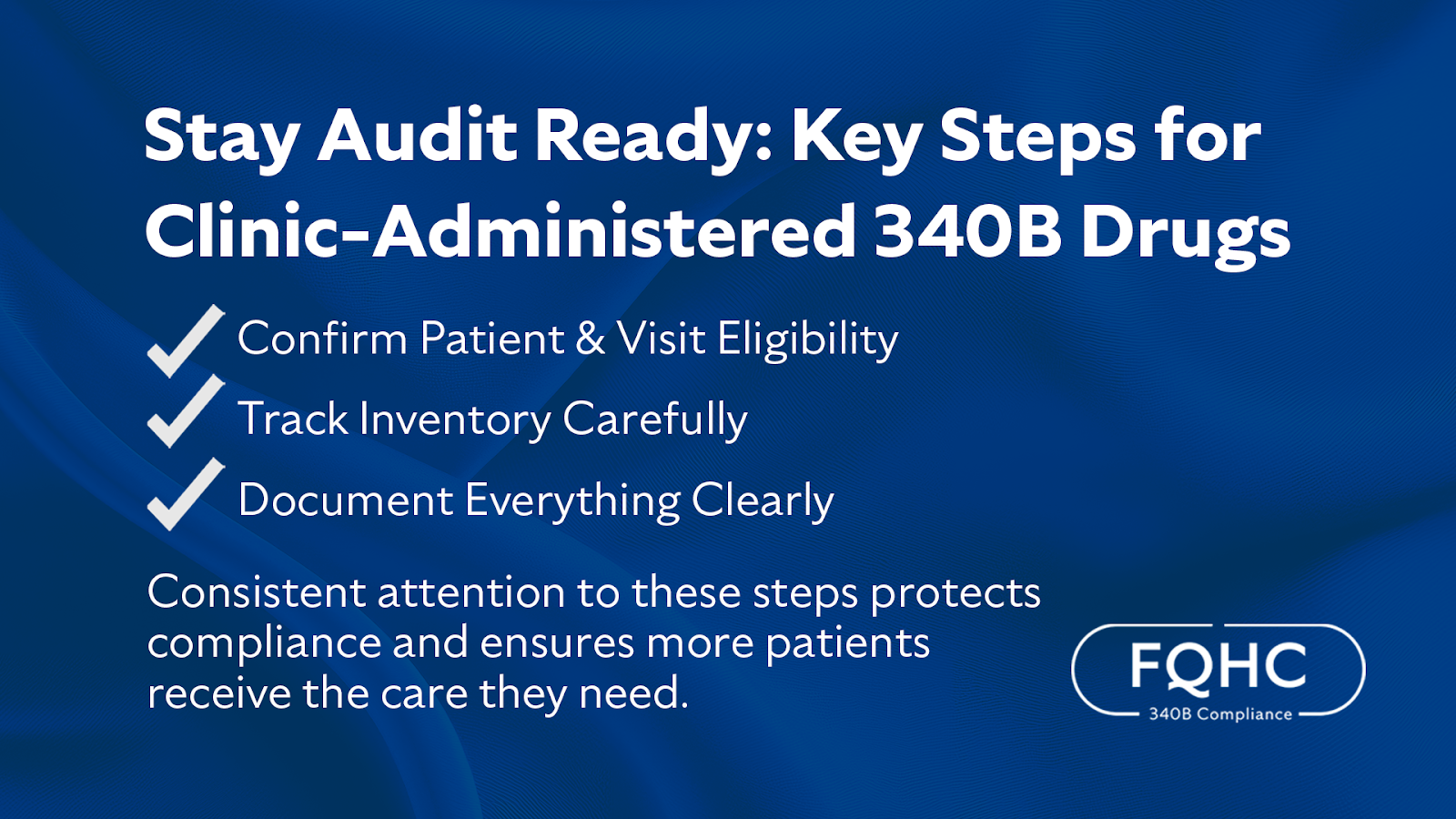
Administering 340B clinic-based drugs requires steady attention, including confirming eligibility, managing inventory, and documenting thoroughly. These aren’t significant changes, just consistent habits that build trust and keep programs compliant.
Every accurate claim supports more patient care, the very reason 340B exists.
Watch the full video here for a straightforward explanation from the experts who work with these challenges every day.
FQHC 340B Compliance is the dedicated partner for Federally Qualified Health Centers seeking assistance with the 340B Program. Their mission is to provide the necessary resources to secure and optimize the 340B Program, enabling health centers to offer more comprehensive services to those in need. With a focus on improved compliance and oversight, they act as more than just consultants or automated systems, tailoring their services to meet your health center's unique needs. Visit their website, call (760) 780-7469, or email info@fqhc340b.com to learn more
The 340B Drug Pricing Program is vital in supporting safety-net providers by enabling Covered Entities to maximize federal resources and expand access to affordable medications. While many associate 340B eligibility with hospitals, a significant portion of the program is designed for Federal Grantees—a diverse group of healthcare organizations that qualify for 340B based on their federal grant status rather than hospital-specific criteria.

.png)